TheyaVue Official Website › Blog › Alpha Lipoic Acid's Largest Eye Trial
Alpha Lipoic Acid's Largest Eye Trial Was Negative, And Nobody Quotes It
Alpha lipoic acid appears on eye supplements as an antioxidant that regenerates other antioxidants, which is true chemistry. The largest trial ever run of it with an eye endpoint gave 600 mg a day to 467 people for two years and found nothing. That result is public, it is well conducted, and it is almost never cited on a page selling the ingredient.
The chemistry, which is real
Alpha lipoic acid is an eight-carbon fatty acid with a disulfide ring. It works as a cofactor for mitochondrial dehydrogenase complexes, which is genuine and uncontroversial biochemistry, and it is unusual among dietary antioxidants in being both water and fat soluble, which means it can act in more compartments than most.
It also regenerates other antioxidants. Reduced lipoic acid can recycle vitamin C and, through it, vitamin E, and it chelates certain metal ions. That is why it appears on labels alongside a carotenoid and two vitamins: the argument is that it makes the others go further.
None of that is in dispute. The question is what happens when the argument is tested in people.
The trial nobody quotes
The 2011 trial is the one to know about. It was randomised, double-blind, placebo-controlled, multicentre and multinational. It enrolled 467 people with type 2 diabetes and randomised 235 to alpha lipoic acid 600 mg a day and 232 to placebo. It ran for two years, with stereo fundus photographs, haemoglobin A1c and an ophthalmological examination every six months.
The primary endpoint was the occurrence of clinically significant macular oedema within the follow-up period. Twenty-six of 235 developed it on the drug. Thirty of 232 developed it on placebo. The confirmatory intention-to-treat analysis found no statistically significant difference. Visual acuity was unchanged throughout in both arms.
The authors reported it as a negative result, which is what it is. It is the largest, longest and best-designed piece of evidence that exists for this ingredient in an eye, and it did not work.
- It is randomised and placebo-controlled, so expectation is accounted for.
- It tested alpha lipoic acid on its own, so the result belongs to the ingredient rather than to a formula.
- It used 600 mg a day, which is the amount the clinical literature uses.
- It ran for two years, which is long enough for a slow outcome.
- It measured a clinical endpoint rather than a blood marker.
- It was large enough to find a modest effect if one existed.
What a negative trial means and does not mean
It means that 600 mg a day for two years did not prevent macular oedema in people with type 2 diabetes. That is a specific finding in a specific population with a specific endpoint, and it should not be over-read either.
It does not mean the molecule does nothing. It does not rule out an effect on a different outcome, in a different population, at a different amount. And it certainly does not mean the ingredient is harmful.
What it does is set the burden of proof. After a well-conducted two-year negative trial, anybody claiming an eye benefit for this ingredient is arguing against the best evidence that exists, and they need something better than a mechanism to do it with.
The study that does get quoted
Marketing pages for eye formulas containing alpha lipoic acid tend to cite a 2020 Spanish study instead, and it is worth reading properly because it is a real piece of work being asked to carry more than it can.
Thirty participants, fifteen with primary open-angle glaucoma and fifteen controls. Six months. The intervention was a commercial preparation containing R-alpha lipoic acid together with taurine, vitamins C and E, lutein, zeaxanthin, zinc, copper and docosahexaenoic acid. The outcomes were plasma total antioxidant status, malondialdehyde, a Schirmer test and subjective dry-eye symptoms.
Antioxidant status rose and malondialdehyde fell in the glaucoma group. Malondialdehyde also fell in the controls. The Schirmer test improved by twenty to thirty percent and subjective dry-eye signs decreased.
Three things about that design limit what it can support, and none of them is a criticism of the authors, who describe their study accurately.
- It is not randomised. It is a prospective study of cases and controls, with everyone receiving the supplement.
- It is a formula, not an ingredient. Nine actives went in together, so nothing in the result can be attributed to the lipoic acid.
- The outcomes are biomarkers. Plasma antioxidant status is a laboratory measurement, and a change in it is not a change anyone can see.
| The 2011 trial | The 2020 study | |
|---|---|---|
| Design | Randomised, double-blind, placebo-controlled, multicentre | Prospective cases and controls, not randomised |
| Participants | 467 people with type 2 diabetes | 30 people, 15 with glaucoma |
| Intervention | Alpha lipoic acid 600 mg a day, on its own | A commercial formula containing R-lipoic acid plus eight other actives |
| Duration | Two years | Six months |
| Primary outcome | Clinically significant macular oedema | Plasma antioxidant status and malondialdehyde |
| Result | Negative. 26 of 235 against 30 of 232. | Antioxidant status rose, malondialdehyde fell |
Two studies of the same molecule, four years and an order of magnitude apart in size. The larger one is the one the marketing does not quote.
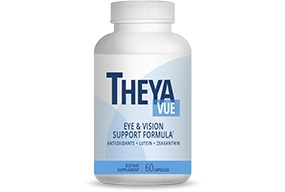
TheyaVue names alpha lipoic acid, and this desk names the trial
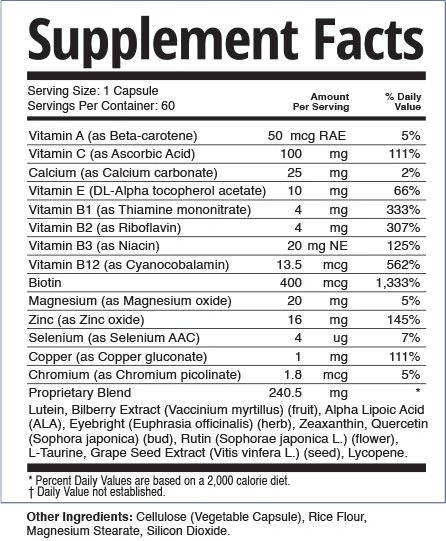
Ten ingredients in one blend, and an ingredients page that cites the negative two-year trial alongside the positive six-month one, because a page that only cites the flattering study is not a source.
Three bottles $147 · six bottles $234 · 60-day money-back guarantee
Order TheyaVue On The Official Website60 capsules a bottle · lot THE-26/GO-7323 · ships from the U.S.
Four levels of evidence, and which one the marketing uses
| Kind of finding | What it can establish | What it cannot |
|---|---|---|
| A large randomised trial with a clinical endpoint | Whether the thing works for that endpoint in that population | Very little else |
| A small non-randomised study with a biomarker endpoint | That a biomarker moved | That anything a patient notices changed |
| A multi-ingredient formula study | That the formula did something | Which ingredient did it |
| A narrative review | What has been published | Anything the underlying studies did not |
Four levels. The marketing for alpha lipoic acid in eye formulas draws almost entirely on the bottom three.
The pattern in this table is the most transferable thing in the article. When an ingredient has a large negative trial and a small positive biomarker study, marketing quotes the second and omits the first, and a reader with no access to the literature has no way of knowing the first exists.
The defence is unglamorous: check whether the strongest evidence is being cited or the most convenient. A page citing a thirty-person biomarker study for an ingredient that has a 467-person clinical trial behind it has made a choice, and the choice tells you something.
The Cochrane review on preventing macular degeneration is a good demonstration of the same principle at category scale: it and its companion review on slowing progression reach different-sounding conclusions, and the difference is entirely in which population was studied.
The dose problem on a blend label
There is a second difficulty specific to the way this ingredient usually appears, and it applies to the label this desk sells.
The clinical literature on alpha lipoic acid uses 600 mg a day. That is the amount in the negative eye trial and it is the amount in most of the neuropathy work that the 2025 review of its clinical record catalogues. It is a substantial quantity of powder.
On a label where alpha lipoic acid sits inside a 240.5 mg blend with nine other ingredients, 600 mg is arithmetically impossible: the entire blend is less than half of it. So whatever the ingredient is doing on that label, it is not doing what the 600 mg literature describes, in either direction. It is neither reproducing the negative trial nor delivering the amount that trial tested.
That is a cleaner thing to say than either the marketing version or the cynical version, and it is what the panel supports.
How to read an antioxidant claim
- Separate the chemistry from the outcome. A molecule that demonstrably quenches free radicals in a test tube has established chemistry, not a benefit.
- Look for the largest trial, not the most recent one. Recency is a marketing virtue. Size and design are the ones that matter.
- Check whether the trial gave the ingredient alone. A nine-ingredient formula cannot tell you which ingredient did anything.
- Check the endpoint. A biomarker is a step on the way to a result. It is not one.
- Check the amount against the label. If the label cannot hold the trial amount, the trial is not about the label.
- Read the NCCIH summary once. It is short, it is written by people with nothing to sell, and it recalibrates the whole category.
The bottom line
Alpha lipoic acid has real chemistry, a substantial clinical literature outside the eye, and one large, long, well-designed eye trial that found nothing.
That trial belongs on any page that names the ingredient, and its absence from almost every such page is the most informative thing about how this category writes about evidence. A desk that cites the thirty-person biomarker study and omits the 467-person clinical one has told you exactly how much weight to give everything else it says.
On a blend label the practical answer is simpler still. The amount is unknown and it cannot be the trial amount, so the ingredient is a minor part of the case for the product, and anyone buying on the strength of it is buying on the strength of a mechanism.
This is a dietary supplement website and this article is product information. Nothing here treats, prevents or manages macular degeneration, cataract, glaucoma or any diagnosed eye condition, and nothing here replaces an eye examination. Sight that has changed is a reason to book one.
References
- Haritoglou C, Gerss J, Hammes HP, et al. Alpha-lipoic acid for the prevention of diabetic macular edema. Ophthalmologica. 2011;226(3):127-137. PMID 21811051. https://pubmed.ncbi.nlm.nih.gov/21811051/
- Sanz-Gonzalez SM, Raga-Cervera J, Aguirre Lipperheide M, et al. Effect of an oral supplementation with a formula containing R-lipoic acid in glaucoma patients. Arch Soc Esp Oftalmol (Engl Ed). 2020;95(3):120-129. PMID 31980324. https://pubmed.ncbi.nlm.nih.gov/31980324/
- Carnib BL, Souza EV, Floresta LRS, et al. Therapeutic applications of alpha-lipoic acid: a review of clinical and preclinical evidence (1998-2024). Biomed Pharmacother. 2025;191:118480. PMID 40834747. https://pubmed.ncbi.nlm.nih.gov/40834747/
- Evans JR, Lawrenson JG. Antioxidant vitamin and mineral supplements for preventing age-related macular degeneration. Cochrane Database Syst Rev. 2017;7(7):CD000253. PMID 28756617. https://pubmed.ncbi.nlm.nih.gov/28756617/
- National Center for Complementary and Integrative Health. Antioxidants: In Depth. National Institutes of Health. https://www.nccih.nih.gov/health/antioxidants-in-depth